Coagulation in Acute Aortic Dissection – The CAAD trial
Study design
Investigator-initiated, single-center, parallel-group (1:1), prospective, randomized, partially double-blinded trial
About the project
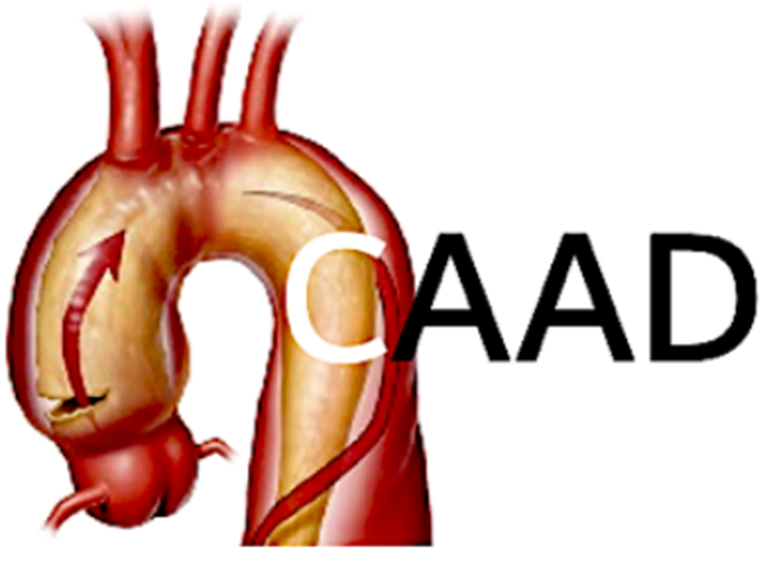
Acute aortic dissection (AAD) involving the ascending aorta (Stanford classification type A) remains a life-threatening disease. Excessive perioperative bleeding requiring massive transfusion of allogeneic blood products, and surgical reexploration remain major challenges in these patients as well as major postoperative morbidity and mortality. Previous research has indicated that patients with AAD present with extensive haemostatic alterations prior to surgery which are aggravated during major aortic surgery with cardiopulmonary bypass and hypothermic full heparinization.
Intensified anticoagulation management guided by heparin dose response (HDR) calculation and repeated measurements of heparin concentration during surgery to suppress thrombin generation during surgery for AAD may be more effective than standard empiric weight-based heparin and protamine management as monitored by activated clotting time (ACT) measurements.
Our randomized controlled clinical trial compares the impact of two approved and recommended anticoagulation management strategies during surgery for AAD including deep hypothermia on activation of coagulation: Heparin/protamine-management based on HDR-titration by means of HMS Plus® versus current institutional standard (Hemochron Elite Signature) (HDR- versus ACT-approach).
The primary endpoint is thrombin generation as measured by early postoperative prothrombin fragment 1+2 (F1+2). Secondary endpoints are other markers of coagulation and fibrinolysis as well as clinical outcomes.
Read more on: https://clinicaltrials.gov/study/NCT05484830
Objective(s)
- To assess whether an intensified anticoagulation strategy using HDR-titration is superior to standard empiric weight-mased anticoagulation management using ACT regarding the suppression of thrombin generation.
- To furthermore assess whether the HDR-approach is superior regarding early postoperative hemostatic capacity, requirement of blood product transfusion, and postoperative bleeding
- To gain valuable insight into the dynamic coagulation status of patients undergoing emergent surgery utilizing hypothermia and cardiopulmonary bypass systems.
- To compare safety and feasibility of both anticoagulation strategies
- To establish a research biobank for relevant future research projects on AAD
Project group
- Ivy S. Modrau, MD, dr.med., Dept. of Cardiothoracic and Vascular Surgery, Aarhus University Hospital (AUH), (Sponsor)
- Jens Eschen, Stud.med, Aarhus University (Principal Investigator)
- Andreas Damsted, Stud.med, Aarhus University
- Julie Brogaard Larsen, MD, PhD, Dept. Of Biochemistry, AUH
- Michael Kremke, MD, Dept. of Cardiothoracic and Vascular Surgery, AUH
- Peter Fast Nielsen, Perfusionist, Dept. of Cardiothoracic and Vascular Surgery; AUH
- Mariann Tang Jensen, MD, PhD, Dept. of Cardiothoracic and Vascular Surgery, AUH
Safety Monitoring Committee
- Prof. Thomas Decker Christensen, Department of Clinical Medicine, Aarhus University
- Prof. Sisse Rye Ostrowski, Department of Clinical Medicine, University of Copenhagen
Funding
- Hartmann Fonden
- Region Midtjyllands Sundhedsvidenskabelige Forskningsfond
- Grosserer A.V Lykfeldts og Hustrus Legat
Status
Finished
Project period
Start: ??
End: ??
