Main research areas
Pharyngeal and other ENT infections
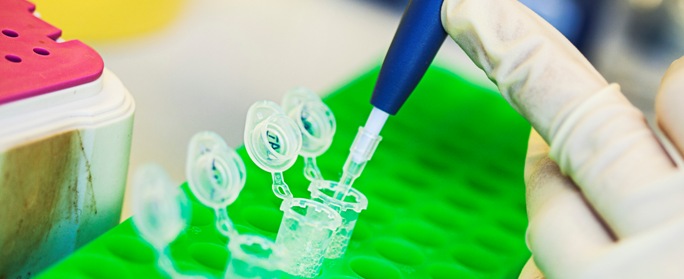
In collaboration with the Department of Clinical Microbiology, Statens Serum Institut, and general practitioners, the department has a long history of research into ENT infections with a special focus on tonsillar microbiology and the importance of Fusobacterium necrophorum.
Laryngeal intraepithelial neoplasia and glottic cancer
Primary surgical treatment of laryngeal intraepithelial neoplasia and early stage glottic cancer was introduced in 2012 based on the principles of transoral laser microsurgery. Along with this approach, new diagnostic techniques were introduced. Research in this field focuses on the efficacy of the diagnostic work-up as well as treatment outcome and morbidity.
Transoral robotic surgery
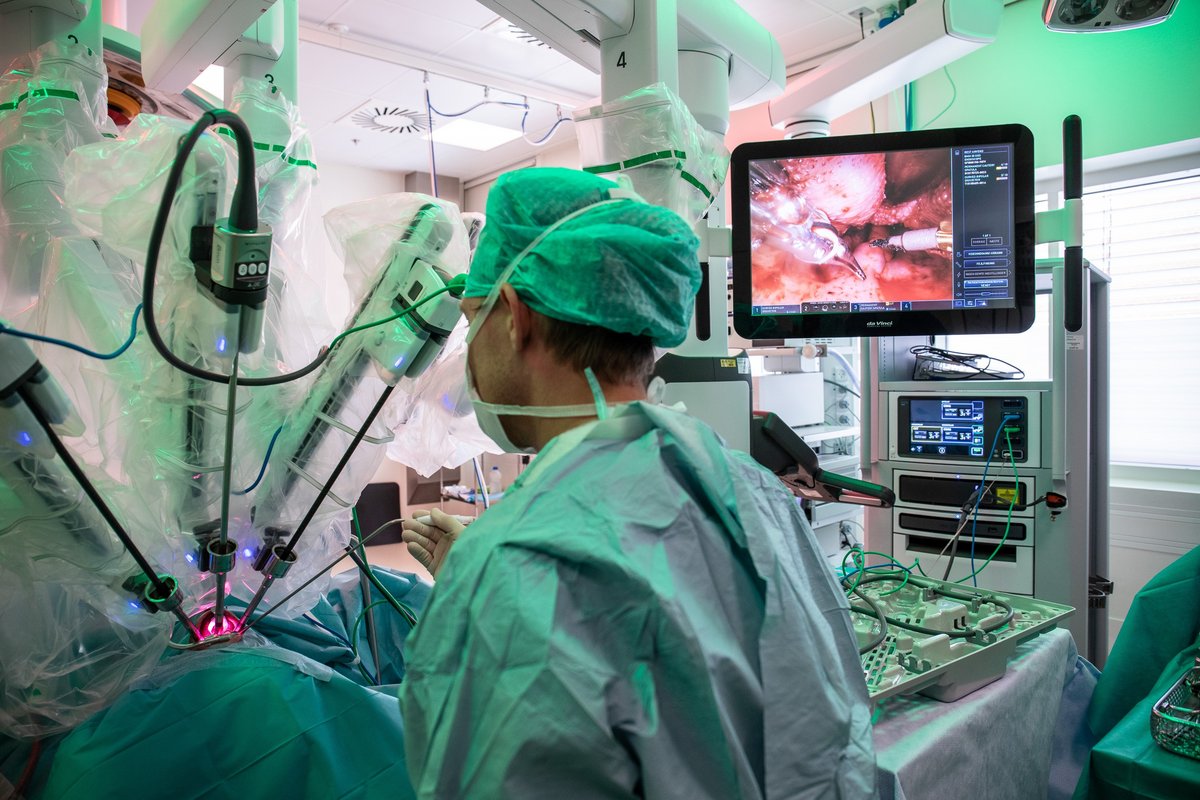
Transoral robotic surgery (TORS) is a promising modality for improvement of head and neck cancer management, especially for CUP and oropharyngeal cancer. The use of robotics as a supplementary diagnostic modality in CUP, as a singly modality treatment in early oropharyngeal cancer, and its cost-effectiveness are focuses of research.
Parkinson’s Disease and Vestibular Mechanisms
In an interdisciplinary collaboration, we investigate the relationship between Parkinson’s disease, balance disorders, and multisensory integration. Using Virtual Reality posturography, advanced motion analysis, and neuroimaging, we examine how the vestibular system and sensory integration are affected in Parkinson’s disease. This work contributes to the development of new diagnostic principles and may ultimately help shape future rehabilitation strategies for patients with neurodegenerative balance impairments.
Vestibular Cortex and Central Balance Processing
Our research group investigates the central mechanisms underlying vestibular processing in the brain. Using advanced functional MRI (fMRI), we examine how vestibular stimuli activate distinct regions within the vestibular cortex, and how these networks are altered in disease. The group also conducts PET studies (FDG-PET) combined with dynamic vestibular stimulation to elucidate the brain’s metabolic response and plasticity in balance disorders. These studies provide new insights into central vestibular circuits and their roles in both physiology and pathology.
Vestibular Function in Children and Adolescents with Hearing Loss
Hearing loss in children is frequently associated with impairment of the vestibular system. We systematically investigate the prevalence, patterns, and consequences of vestibular dysfunction in children and adolescents with sensorineural hearing loss. The research program includes clinical testing, longitudinal assessments, and the development of screening strategies, with a focus on motor development, balance, and functional outcomes. The aim is to enable earlier identification and improved rehabilitation of children with combined auditory and vestibular impairment.